
Buying near the water can be an exciting lifestyle decision, but it calls for a more detailed review than a typical home search. For buyers comparing communities around Escambia and Santa Rosa counties, Pensacola, FL real estate expert Brooke DeWall offers local real estate guidance through Brooke DeWall’s website, a resource focused on helping buyers make informed property decisions in and around Pensacola, Florida. Area-specific perspective can be especially valuable when comparing neighborhood character, home values, coastal conditions, and the practical details behind a purchase.
In 2026, the best coastal home is not automatically the one with the lowest price, largest deck, or most dramatic view. It is the property that fits your routine, has manageable risk and maintenance demands, and leaves room in your budget for the real costs of ownership.
Why The List Price Is Only The Starting Point
Two homes with similar asking prices can produce very different monthly expenses. Start with the projected mortgage payment, then add property taxes, homeowner’s insurance, possible windstorm coverage, flood insurance, HOA dues, utilities, lawn care, and a maintenance reserve. Salt air, humidity, heavy rain, and strong storms can make deferred maintenance more expensive along the coast.
For example, a buyer may find two $450,000 homes that appear comparable. One may have a newer roof, storm-rated windows, modest insurance costs, and no association fee. The other may need roof work, carry a higher wind deductible, require flood coverage, and have monthly HOA dues. The second home can cost hundreds more per month before any unexpected repair occurs. Review seawalls, docks, decks, drainage, electrical panels, and aging systems carefully rather than assuming attractive finishes mean the home is low maintenance.
Step One: Define Your Daily Routine
Views and square footage matter, but daily life determines whether a location remains satisfying after the excitement of moving fades. Before touring homes, rank the features that matter most to your household.
- Commute time, bridge crossings, and access to major roads.
- Distance to grocery stores, health care, schools, parks, and restaurants.
- Access to the beach, bay, river, marina, downtown, or outdoor recreation.
- Noise and traffic during weekdays, weekends, holidays, and tourist season.
- Parking, storage, pet-friendly space, yard size, and room for gear or boats.
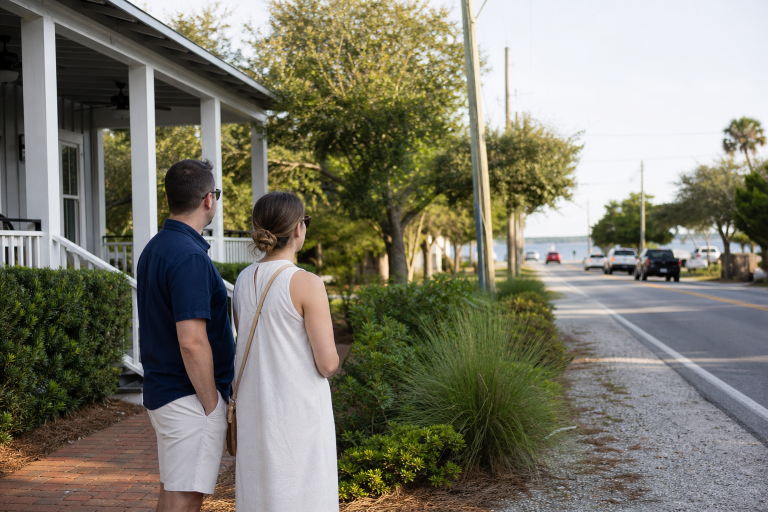
Visit promising neighborhoods at more than one time of day. A quiet morning drive may not reveal weekend traffic, late-night activity, seasonal parking pressure, or the route emergency vehicles and school traffic use.
Step Two: Check Flood Risk And Elevation Early
Flood review should happen before the inspection period, not after you are emotionally committed to a home. Use the FEMA Flood Map Service Center to look up the address and identify official flood hazard information. Map status is important, but it is only one part of the property-level conversation.
- Confirm the current flood zone and ask whether the map is under review or changing.
- Request an elevation certificate if one is available.
- Ask about prior flood claims, storm damage, water intrusion, and drainage repairs.
- Look at lot grading, nearby waterways, roadside drainage, and the crawl space or lower level.
- Remember that a lower-risk classification does not mean flooding is impossible.
Step Three: Price Insurance Before Making An Offer
Insurance should be part of the home search, not a last-minute closing task. Request homeowner’s insurance quotes early, then ask whether windstorm or hurricane coverage is separate. If flood coverage is appropriate, request an estimate and compare deductible options, exclusions, roof requirements, and coverage limits. An insurer may also require repairs before it will bind a policy, which can affect your negotiation strategy and closing timeline.
Step Four: Compare Construction And Maintenance
Coastal homes should be compared by resilience and condition, not just cabinetry and paint colors. During tours and inspections, focus on roof age and remaining life, impact-rated windows or shutters, foundation and drainage conditions, HVAC performance and humidity control, plumbing, electrical, water heater age, exterior paint, siding, decks, fences, and landscape grading. Ask for permits for additions, docks, major renovations, and structural work.
Step Five: Review HOA And Condo Documents
Association documents often reveal costs and limitations that a listing cannot fully explain. Review monthly or quarterly dues, reserve funding, recent board minutes, pending special assessments, rental restrictions, pet and parking rules, renovation requirements, and storm-damage policies. Condo buyers should also understand what the master insurance policy covers, what remains their responsibility, and whether building repairs could create future assessments.
Step Six: Use A Local Market Comparison
Price per square foot is a starting point, not a verdict. Compare recent closed sales in the same neighborhood, then account for lot size, condition, age, elevation, water access, renovations, views, and storm protection. Separate fully updated properties from homes that need substantial work. Also, look at days on market, price reductions, and buyer demand across nearby communities. A local comparison helps explain why two apparently similar homes may command very different prices.
Questions To Ask During A Home Tour
- How old is the roof, and has it been repaired after a storm?
- Has the property experienced flooding, water intrusion, or wind damage?
- What does the seller currently pay for homeowners, wind, and flood insurance?
- Are permits available for additions, decks, docks, and major renovations?
- What remains with the home, including appliances, storm panels, and outdoor equipment?
- How noisy is the area at different times of day and year?
- Are road, drainage, utility, or development projects planned nearby?
What To Review Before Closing
Before signing, review the inspection report, appraisal, insurance binder, title documents, agreed repair receipts, lender conditions, and final walk-through results. Compare final loan terms with your Loan Estimate, verify seller credits and cash-to-close, and carefully review the Closing Disclosure. For applicable mortgage transactions, buyers generally receive this document at least three business days before closing, giving them time to question unexpected changes.
Frequently Asked Questions
Is A Coastal Home A Good Buy In 2026?
It can be, provided the home fits both your lifestyle and your full financial picture. Insurance, flood exposure, maintenance, financing, condition, and long-term plans matter as much as location.
Should Buyers Avoid Homes In Flood Zones?
Not necessarily. Flood-zone status should be evaluated alongside elevation, construction, drainage, prior damage, insurance pricing, and loan requirements.
What Is The Most Overlooked Coastal Home Cost?
Insurance is often the biggest surprise, followed by wind deductibles, roof repairs, drainage work, flood coverage, and association assessments.
How Early Should Buyers Get Insurance Quotes?
Ideally, before submitting an offer. Early quotes help confirm whether the property truly works within your monthly budget.
Conclusion
A smart coastal purchase requires a full-property review. Weigh neighborhood fit, construction, flood risk, insurance, association rules, and long-term ownership costs together. The strongest choice may not be the home with the best view or the lowest list price. It may be the one that supports your daily life, protects your budget, and remains practical through changing conditions.